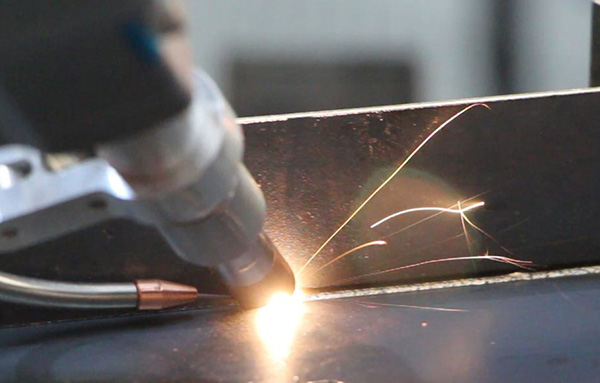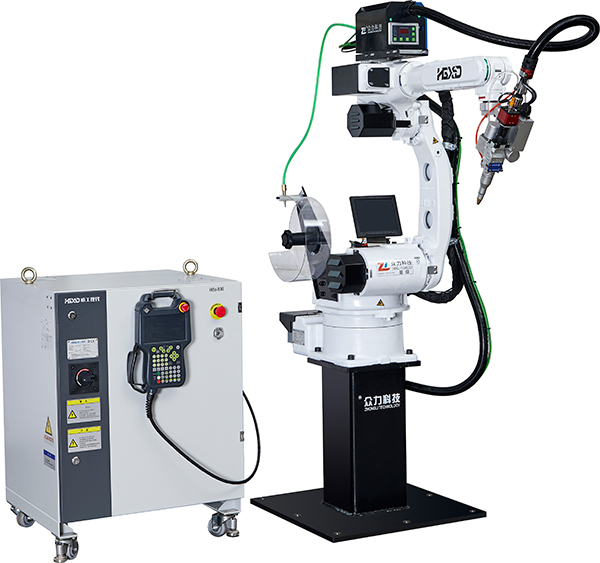
The laser welding machine industry originated in the 1960s, when the birth of laser technology brought new possibilities for change in the welding field. With the passage of time, laser welding technology has continuously improved and gradually emerged in industrial production. The laser welding machine industry in China started relatively late, but its development trend is rapid. From initially relying on imported equipment and learning foreign technology, to now establishing a complete industrial chain, after decades of unremitting efforts, we have achieved a transformation from scratch and from weakness to strength. The product types have shifted from single to diverse, and the technological level has moved from basic to high-end, playing a key role in many fields such as automobiles, aerospace, rail transit, electronics and appliances.
The competition in China's laser welding machine market is fierce and presents a diversified trend. Domestic enterprises, with their cost advantages, in-depth understanding of the local market, and fast response to localized services, occupy a large share in the mid to low end market. Companies such as Lianying Laser, Dazu Laser, and Huagong Technology have significant influence in the domestic market. Foreign companies, relying on long-term technological accumulation, advanced research and development capabilities, and strong brand effects, occupy a leading position in the high-end market. However, in recent years, domestic enterprises have continuously increased their R&D investment and rapidly improved their technological level, gradually narrowing the gap with foreign enterprises and entering the high-end market.
1、 Industry development prospects
(1) Market driven factors
1. Manufacturing upgrade: The global manufacturing industry is transforming towards high-end, intelligent, and green, with significantly higher requirements for welding quality, accuracy, and efficiency. Laser welding machines, as advanced welding equipment, can help enterprises enhance product competitiveness, and market demand is bound to continue to grow.
2. Rise of emerging industries: The new energy vehicle market is booming, and its production process has a strong demand for laser welding machines; The rapid development of the electronic information industry has also driven the demand for laser welding machines in chip manufacturing, packaging, and micro component welding.
3. Policy support: Governments around the world have introduced policies to support the development of advanced manufacturing industries, encouraging enterprises to adopt efficient and environmentally friendly production equipment and processes. Laser welding machine, as a green welding technology, meets environmental protection requirements and is more easily adopted by enterprises under policy promotion.
(2) Technological development trends
1. Higher power and efficiency: In the future, the power of laser welding machines will continue to increase, enabling one-time welding of thicker materials, greatly reducing welding time, and improving production efficiency.
2. Integration of intelligence and automation: With the deepening of Industry 4.0 and intelligent manufacturing concepts, laser welding machines will be deeply integrated with robots, automated production lines, etc., to achieve intelligent functions such as automatic positioning, weld seam tracking, and quality inspection in the welding process.
3. Multi material and heterogeneous material welding optimization: In response to the application of new materials and the connection needs of heterogeneous materials in modern manufacturing, laser welding machines will continuously optimize welding process parameters to enhance their ability to weld difficult to weld materials and between different materials.
4. Miniaturization and portability: In order to meet the needs of maintenance, on-site construction, and small component processing, laser welding machines will develop towards miniaturization and portability, expanding their application scope.
(3) Facing challenges
1. Cost issue: The procurement cost, maintenance cost, and operating energy consumption cost of laser welding equipment are relatively high, which is a significant burden for small and medium-sized enterprises and limits their wider application.
2. Shortage of technical talents: Professional technical talents are needed for operating, debugging, and maintaining laser welding machines. Currently, there is a shortage of such composite talents, and enterprises need to invest a lot of time and cost in talent cultivation.
3. Imperfect industry standards: Existing industry standards are difficult to meet the rapid development needs of the industry in some aspects, and there is a lack of unified norms for quality assessment of new welding processes, equipment performance testing, etc., which affects the healthy development of the industry.
In summary, the laser welding machine industry has broad prospects in 2025, but it also faces many challenges. Industry enterprises need to constantly innovate, improve their technological level, reduce costs, in order to adapt to market demand and gain advantages in fierce market competition.